What Can You Expect From Ratings and Reviews Behavior After a Product Is Launched?
Ratings & Reviews
.png)



The first weeks after a launch are nerve-wracking. Reviews start trickling in, the star rating moves around, and everyone on the team has a theory about what it means. A rating that slips from 4.8 to 4.5 can trigger a meeting. A sudden spike in reviews can look like a triumph or a warning sign, depending on who is reading the chart.
There is no universal script for how ratings and reviews behave after a launch. Products differ, categories differ, and plenty of outside factors are in play. Still, some patterns come up often, and knowing them helps you tell normal settling from a real problem.
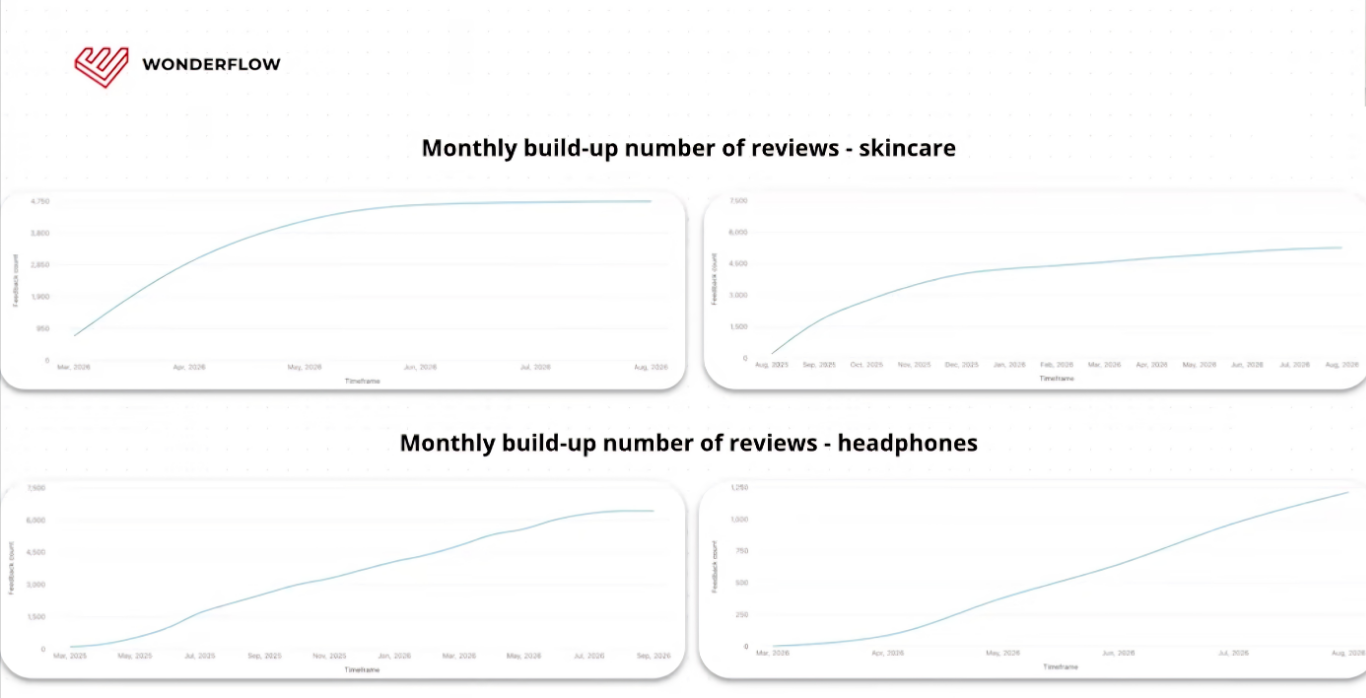
The count of reviews only goes up. What changes is the velocity. Two categories below show the contrast well. In skincare, reviews often pile up quickly right after launch and then level off as the pace slows. In headphones, review growth tends to be steadier, with a rate that holds for a long stretch and no early burst.
Neither pattern is better. What matters is knowing which one belongs to your category so you compare your launch against the right baseline. If you expect skincare-style growth and see a headphones-style curve, the difference may come from buying behavior and say nothing about your launch. Comparing your curve with similar products is easier with platforms for customer review analytics that track review counts side by side.
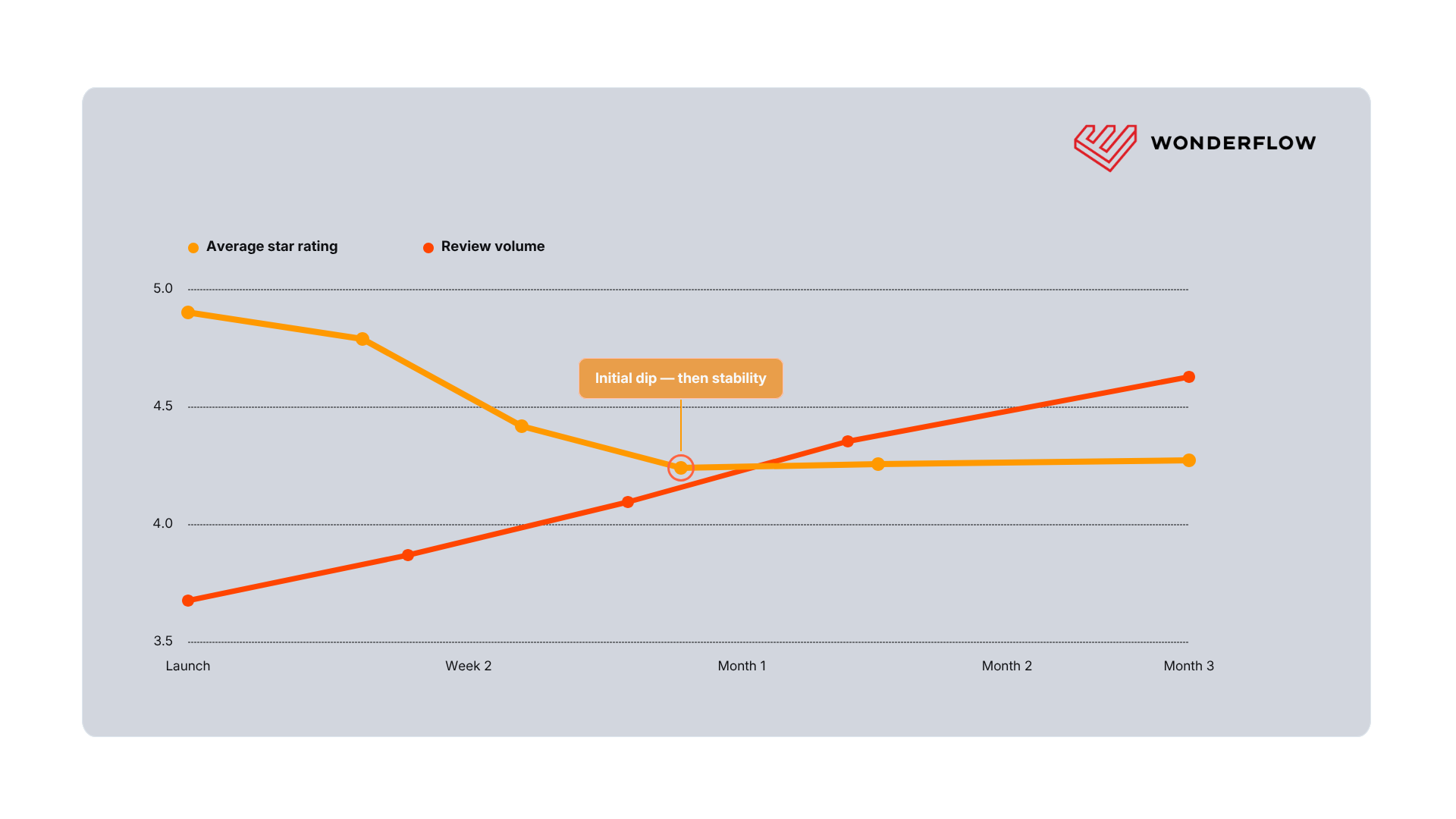
The other key metric is the rating itself. Looking at the same example products, a pattern shows up more frequently than not, though it does not always hold true. At the very beginning, the rating tends to be very high, and it starts to go down. This makes sense if you consider that the first people buying and reviewing a product are probably enthusiasts, the same kind of people described in forums. They know the product is coming, they are waiting for it, they are passionate about the brand, and they are experts in the industry, so they know the features and what to expect. It makes sense that their opinions are very good.
The important thing to monitor is that after this initial slowdown or decline, the rating stabilizes at a healthy level. If it continues to go down, to a 4-star, then 3.8, then 3.5, that is a real issue rather than a regular trend. A customer feedback analysis tool that ties sentiment to specific topics is useful here, since it shows which complaint is behind a continued decline rather than a normal settling.
Many things can affect the performance of ratings and reviews. Some sit outside the scope of voice of the customer, such as marketing campaigns and marketing investment, which obviously have a big impact on how a launch performs. Two other things can be monitored through ratings and reviews directly.
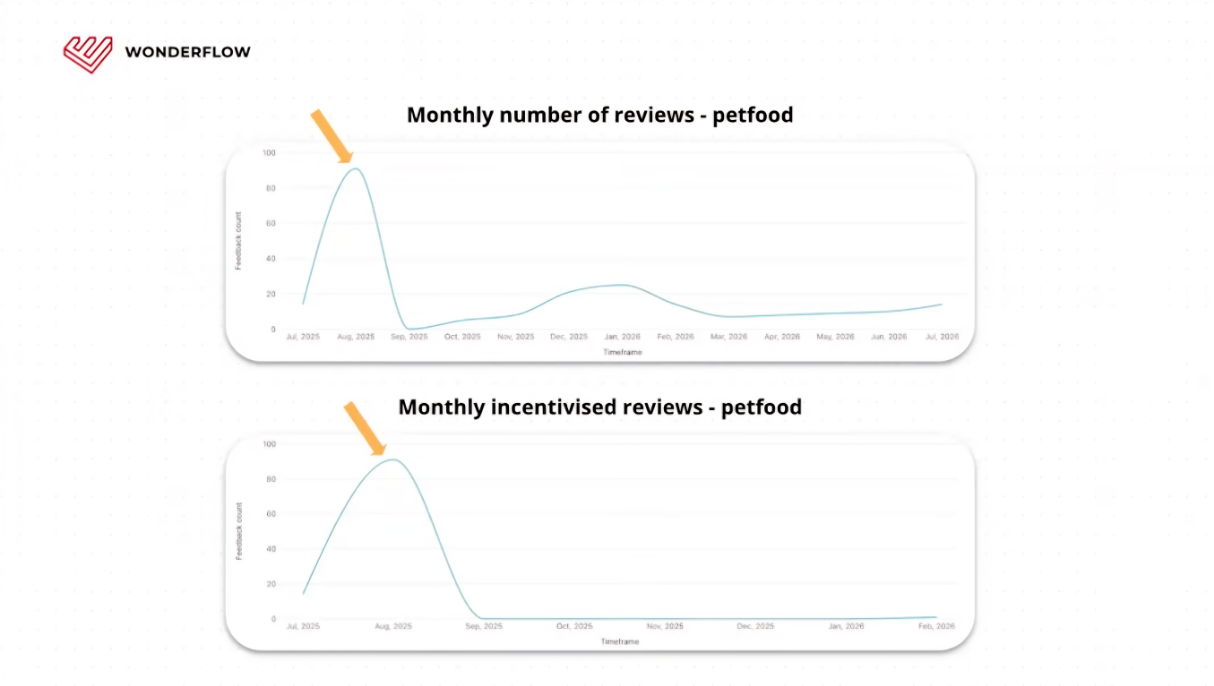
This is not a practice in every industry, but in some it is quite significant, with the majority of launches in certain industries coming through incentivized reviews. Pet food is an example: the chart for the first month can show a big spike in the number of reviews, which without context looks like a great first month followed by a decline. Looking at the chart of incentivized reviews underneath explains it, since basically all the reviews in that first month were incentivized. This is neither good nor bad, but it is something to bear in mind when analyzing performance, because it can explain certain behaviors.
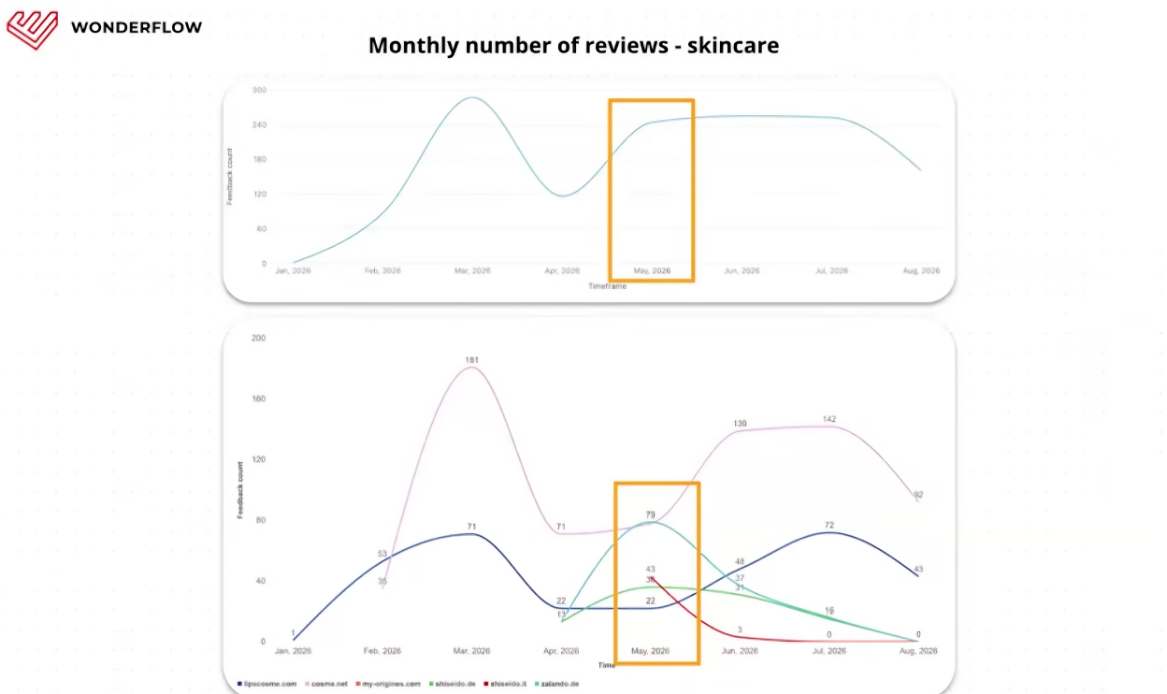
In one example, the number of reviews for a product goes up for a few months, starts to decline, and then peaks again. The chart of e-commerce platforms below explains why: the product was present and getting reviews from only a couple of e-commerce platforms at first, and after three or four months it started being present on other e-retailers too. This has an impact on the number of reviews being collected, so when looking at a product as a whole, it matters to bear distribution in mind, since it affects both review velocity and potentially the rating. This is where ecommerce consumer insights become practical, since they let you break performance down by retailer instead of reading the product as a single blended line.
A short way to keep this straight when you are watching a new launch: compare velocity against your category's typical pattern, watch whether the rating settles after its initial dip rather than keeps sliding, and before reacting to any spike or drop, check whether incentivized reviews or a new retailer listing explains it.
Wonderflow helps leading consumer brands transform unstructured feedback into actionable insights. Its AI Product Intelligence platform analyzes millions of online ratings, reviews, surveys, and customer comments, empowering teams to make smarter product, marketing, and customer experience decisions.


The AI platform that transforms customer feedback into actionable insights


.png)