The Real Impact of Ratings and Reviews: Where Their Influence Is Growing
Ratings & Reviews



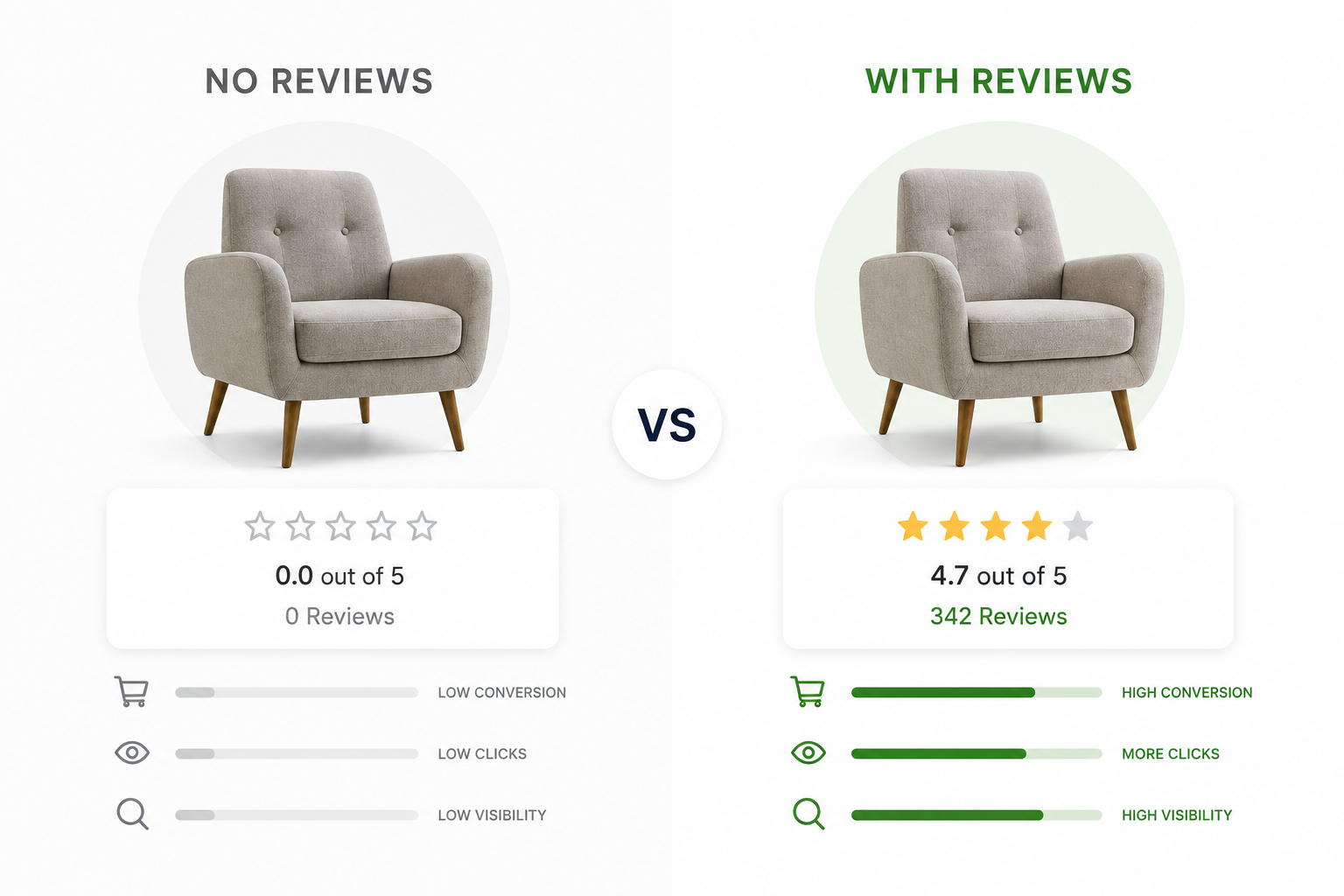

At some point, every brand running a Ratings & Reviews program asks the same thing: is this actually worth the investment? It's a reasonable question. Collecting reviews well takes real effort, from moderating content to deciding how it's displayed to keeping a steady flow of new reviews coming in.
The good news is there's now solid data to answer this, especially in categories like durable goods and appliances. Reviews have a well documented effect on both conversion and product discovery. There's also a newer pattern showing up in how AI search tools decide which products to recommend, and it's changing how brands should think about review strategy going forward.
Here's what the data shows and what it means for where to focus.
The clearest finding across large retail studies is that reviews create a noticeable lift the moment they appear, and that lift keeps growing as more reviews come in, often well past the point most brands assume it levels off.
In the appliances and electronics category, a product page with just one to ten reviews converts roughly 70% higher than an identical page with none. That lift more than triples once a product reaches 31 to 50 reviews, and it continues climbing beyond that. Shoppers aren't just looking for proof a product works. They're calibrating how confident to feel based on how many other people have already weighed in.
Average rating matters too, though maybe not in the way most brands assume. Conversion peaks in the 4.25 to 4.99 range, not at a perfect 5.0. A flawless score can come across as suspicious to shoppers, while a strong rating with a few honest critiques feels more trustworthy.
Recency plays a role here as well. In appliances and electronics specifically, shoppers weigh how current the feedback is almost as heavily as how much of it exists, which makes an ongoing collection strategy far more valuable than a single push at launch. A customer review analysis approach that tracks these patterns over time can help brands spot when review freshness starts slipping before it affects conversion
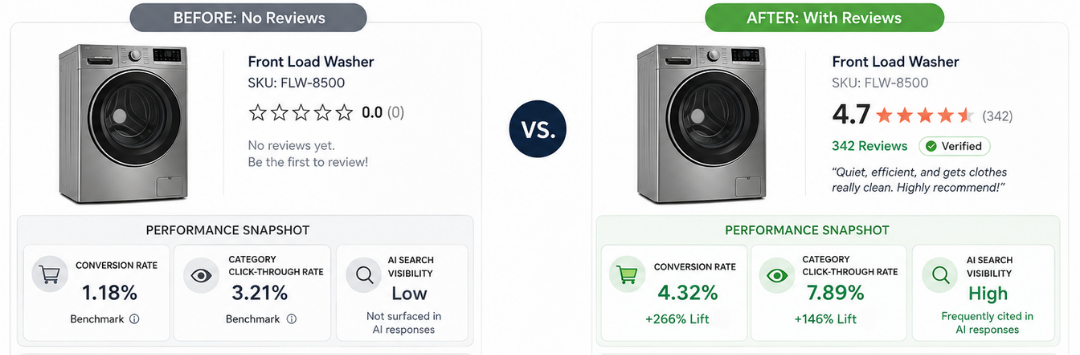
Most conversion research focuses on the product page, but there's a quieter effect happening one step earlier, on the category or listing page, before a shopper has clicked into anything.
When star ratings show up at the listing level, they work like a filter. Shoppers scan a grid of products and use the visible rating as a quick way to judge quality before deciding which ones are worth a closer look. This makes the category page a traffic allocation point, not just a browsing step. Products with strong, visible ratings pull in a larger share of clicks, which is what lets them benefit from the product page lift in the first place. Products with thin review coverage can lose out on traffic before a shopper ever sees the full listing.
The practical takeaway is that a strong review program isn't only about polishing individual product pages. It's about making sure every SKU has enough review coverage to compete for clicks at the listing level, not just the bestsellers. This is where a broader ecommerce consumer insights view helps, since it shows which products are underperforming on review volume across an entire catalog, not just the ones already getting attention.
The newest shift, and the one fewest brands have accounted for, is what happens when a shopper skips the retailer's website altogether and asks an AI assistant for a recommendation instead. Shopping related queries on tools like ChatGPT are now estimated in the tens of millions per week in the US alone, and platforms like Perplexity reference customer reviews in most of their product related answers.
This changes what reviews are actually doing. They're no longer just persuasion content aimed at a human visitor. They've become source material that AI systems pull from to decide whether to recommend a brand at all, and how to describe it when they do. A few patterns are showing up consistently:
It's worth being honest about the limits here. The research on AI search behavior is much younger than the conversion literature, it's changing month to month, and much of it comes from vendors with a stake in AI visibility tools. Still, the pattern is consistent enough to start acting on now rather than waiting for the research to fully mature. A sentiment analysis approach can help brands understand not just what reviews say, but how consistently that sentiment holds up across platforms, which increasingly affects how AI tools represent a brand.
Put together, these three effects, product page conversion, listing page discovery, and AI search visibility, point toward the same set of priorities for any brand building or scaling a review program.
That last point is where a structured consumer insights platform proves useful long after the initial case for investment has been made. The real value isn't in the first analysis. It's in the ongoing ability to see which products, locations, or markets are falling behind on review coverage or sentiment, and to act on that continuously instead of starting the analysis over each quarter.
Wonderflow helps leading consumer brands transform unstructured feedback into actionable insights. Its AI Product Intelligence platform analyzes millions of online ratings, reviews, surveys, and customer comments, empowering teams to make smarter product, marketing, and customer experience decisions.


The AI platform that transforms customer feedback into actionable insights


.png)