How to Find Consumer Pain Points and Unmet Needs Using Ratings, Reviews and Social Media
Consumer Insights


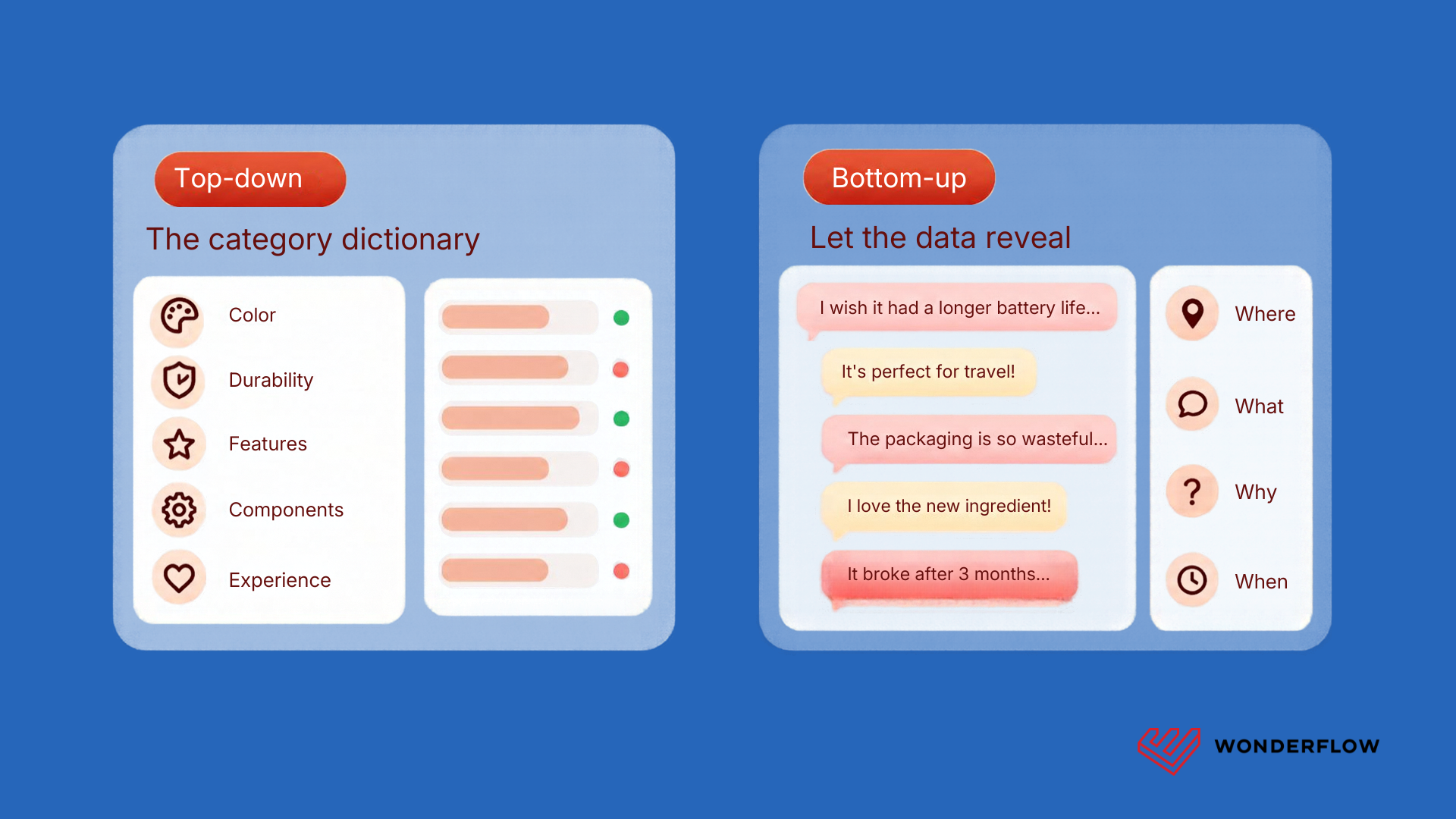

Before a new product takes shape, the smartest thing a team can do is find out what is already going wrong in the market. Which frustrations keep coming up? What are people wishing for? Which topics did nobody mention last year that everybody mentions now? Reviews and social conversations contain all of this. The challenge is getting it out reliably, and two complementary methods work best when used together.
The first method starts with structure. For each product category, and down to the subcategory level, you define an extensive list of the aspects that matter to buyers. It covers components, features, qualities and experiences. Building it takes years of category knowledge, because you need to know what customers of a specific product type care about. What matters for a toothbrush differs from what matters for a dishwasher.
Every review and comment is then mapped against that dictionary. If someone says the price is too high and the color is lovely, the system records a negative mention of price and a positive mention of color. Because the dictionary is defined in advance, results stay consistent, so you can compare products, brands and time periods fairly. A well-built customer insights software ships with these category dictionaries already in place, which saves you from building one from scratch.
Looking at one category with two dictionary topics, color and lifespan, tracked over the years, color is becoming less relevant, meaning it impacts customer choices and final opinions less over time. Lifespan, meaning the durability of the product, is becoming more of an issue over time.
For a team planning to launch within that category, this raises a real question: invest more in durability, in design, or in both, since color being less relevant at the moment could also be an opportunity to bring it back if you want to be recognized for the coolest design.
The second method makes no assumptions. A large language model reads the comments and identifies what people are talking about on its own. It organizes the findings around four questions: where, what, why and when. Where was the product used? What happened? Why did the person react that way? When did it occur?
This is how you catch topics the dictionary does not contain yet. A new use case, a surprising complaint or a fresh ingredient in skincare can appear here before anyone thought to add it to a list. It also works across every channel, so the voice of the customer tools you choose should apply it to forums, social posts and video comments as well as reviews.
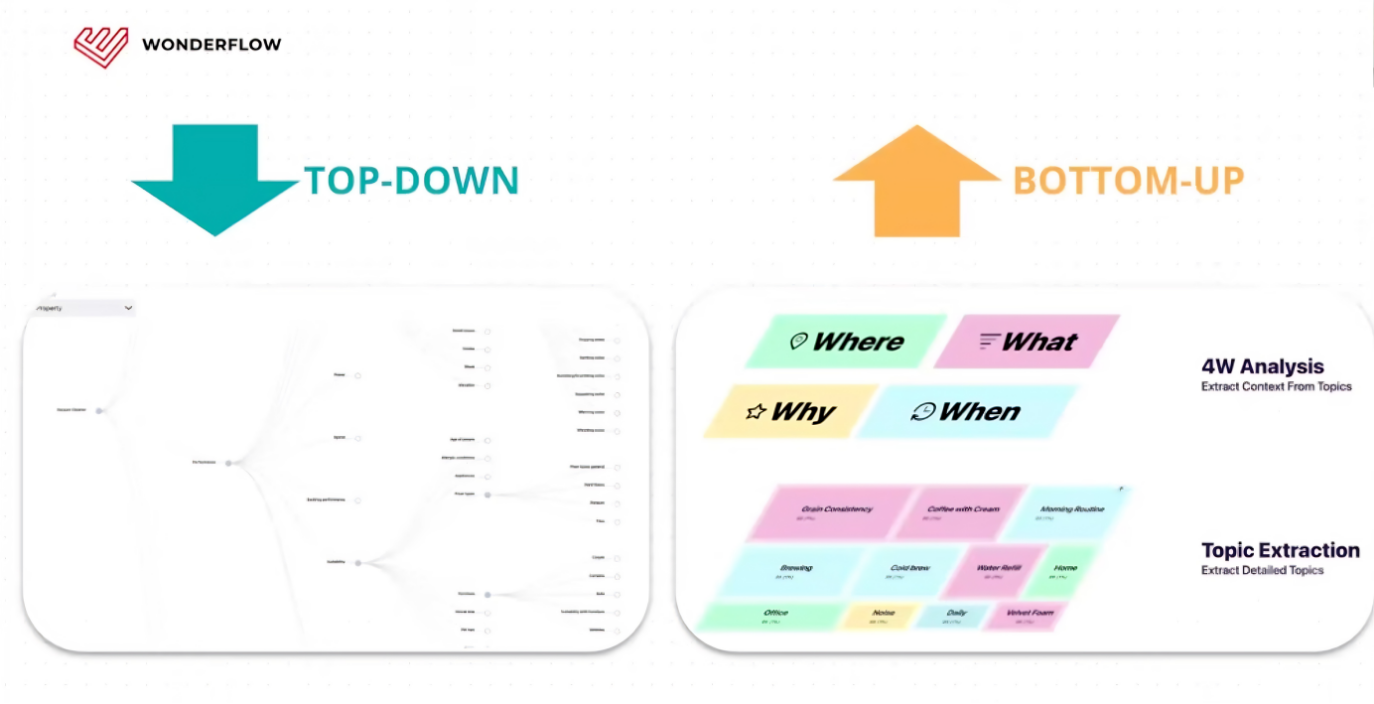
The two approaches complement each other. The top-down method gives you stable, comparable measurements of the topics you know matter. The bottom-up method gives you early sight of the topics you did not know to look for. Running them together means you catch the new without losing track of the known.
Once every comment is classified, you can count. And once you can count, you can watch change over time, which is where trends and pain points become visible.
Consider a category where color and lifespan are tracked over several years. Suppose color is becoming less relevant to buyers' final opinions, while lifespan, meaning durability, is becoming a bigger complaint. A team planning a launch in that category has a clear signal. Buyers are increasingly frustrated by products that wear out, so investing in durability makes sense.
The team could also decide to bring color back as a differentiator, on the theory that if competitors have stopped caring about design, a bold and recognizable look could stand out. The data does not make that decision for you, but it shows you the options with real evidence behind them.
Pairing topic counts with tone matters here. A customer feedback analysis tool shows whether mentions of a topic are climbing because people love it or because they are annoyed by it, and those two situations call for opposite responses.
Pain points. These are the recurring complaints about existing products. When the same issue appears across many reviews and platforms, it points to a gap a new product could close.
Outstanding wishes. Reviewers often say things like "I wish it could do this" or "I wish it worked that way." Those statements describe needs the market has not met, and they are among the most useful lines in any review.
Emerging topics. These are subjects that people were not discussing before and now mention regularly. They show what is starting to matter.
Velocity. Some topics grow much faster than others. In skincare, for example, a single ingredient can go from obscure to everywhere in a short period. Tracking how quickly a subject is growing helps you separate a passing spike from a real trend. The same idea applies to features, materials, design styles and use cases in any category.
Analyzing all this used to require an analyst and a lot of time. Conversational agents now let you ask questions directly, such as what the main complaints about a product are or which wishes appear most often. Many of the recurring questions research teams ask are available as prebuilt prompts, so you get answers quickly and can refine them with follow-ups. The same goes for trends, where agents point to new and fast-growing topics without anyone combing through raw text. For wishes in particular, ai for customer review analysis can pull every "I wish it would" statement into one list you can sort by frequency.
These methods are most valuable before a launch, while you are still deciding what to build. Knowing which problems are growing, which wishes are unmet and which trends are just beginning can shape the whole product.
Wonderflow helps leading consumer brands transform unstructured feedback into actionable insights. Its AI Product Intelligence platform analyzes millions of online ratings, reviews, surveys, and customer comments, empowering teams to make smarter product, marketing, and customer experience decisions.


The AI platform that transforms customer feedback into actionable insights