The Granular Pivot: Decoding Amazon’s New Logic for Variation Reviews
Ratings & Reviews



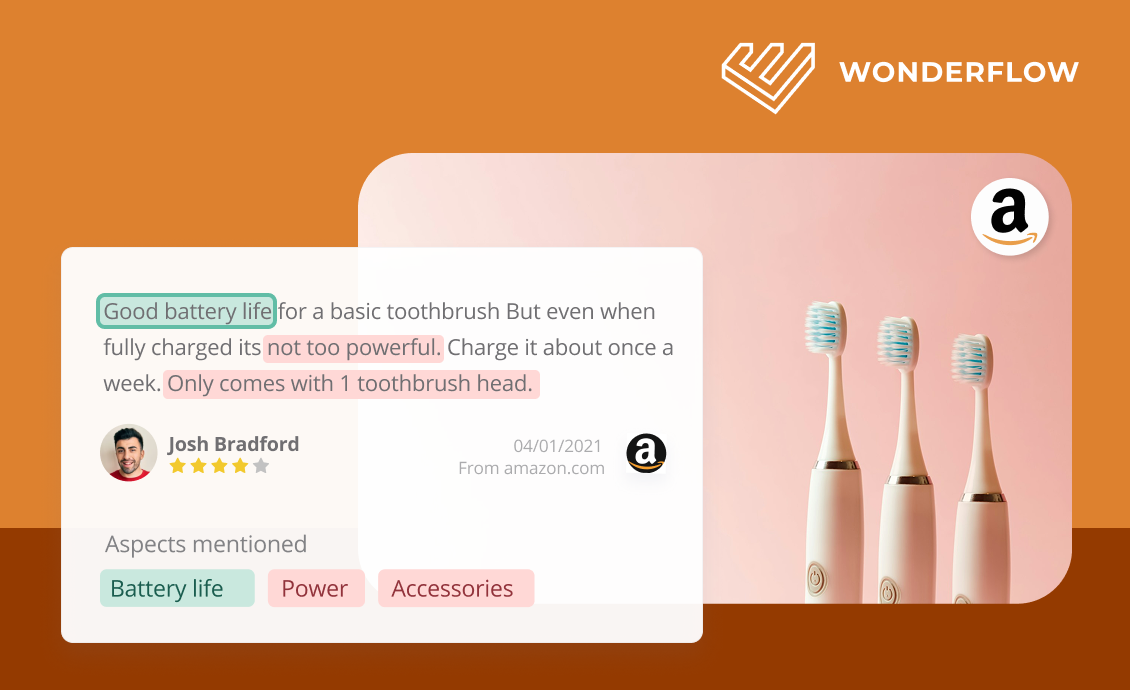

In the world of e-commerce, social proof is the ultimate currency. which is why AI for customer review analysis has become essential for brands trying to understand what granular feedback is really saying about each product variant.
For years, the architecture of the Amazon marketplace has allowed brands to utilize "parent-child" variations to pool customer feedback. If a brand had several versions of a product (like different sizes, colors, or technical specs) they could group them together under one page. This meant the star rating a shopper saw at the top was actually a combined score from every version in that group, even if the products weren't exactly the same. This can lead to reviews that don’t accurately reflect the specific variation a customer is considering.
But as of February 12, 2026, Amazon has officially begun changing its review-sharing policies, signaling a shift toward granular transparency.
At Wonderflow, we’ve always advocated for the power of specific consumer insights at SKU-level, which lies at the basis of our configuration strategy; now, Amazon’s algorithm is catching up to that philosophy.
Here is everything you need to know about the redistribution of reviews and how it impacts your brand.
Previously, Amazon was relatively permissive. If you grouped different versions of a product under one listing, they shared a single star rating and review count.
The new rule is simple: Reviews will only be pooled if the differences between variations are minor and do not affect the product’s core functionality, performance, or the consumer’s primary experience. Platforms for customer review analytics that already operate at SKU level are best positioned to help brands navigate this change without losing insight continuity.
If the variations are functionally identical, Amazon recognizes that a customer's feedback on a product's quality remains relevant across the variations. A few exampleS:
This is where many brands will see a significant impact. If a variation offers a distinct level of performance or a unique sensory experience, it must now stand on its own:
Electronics: Variations with different RAM, processors, or wattages (e.g., a 20W vs. 50W speaker) will no longer share reviews.
Consumables: Flavors (Chocolate vs. Vanilla protein) and primary scents (Rose vs. Jasmine candles) are being decoupled.
Material & Design: Aluminum vs. stainless steel pans, or slim fit vs. regular fit jeans.
Bundled Value: A standalone product vs. a bundle.
Amazon’s motivation is clear and corroborates Wonderflow’s vision: reviews build trust. This change will help customers understand product-specific feedback before purchase, increasing trust and potentially decreasing returns.
Shoppers often felt misled when they purchased a base-model laptop with a 3.8-star actual performance, only to realize the 4.5-star rating on the listing was driven by a high-end, expensive variant. By making reviews reflect the specific item being considered, Amazon aims to increase buyer confidence and decrease the logistical nightmare of "not as described" returns.
The rollout follows a phased approach:
It’s important to note: Reviews are not being deleted. They are being redistributed.
However, for many brands, individual variations that previously benefited from a shared "halo effect" may see a sudden drop in review count or a fluctuating star rating.
At Wonderflow, we’ve long prioritized SKU-level granularity as a core principle of our product intelligence platform. We treat meaningful product differences (like performance, formulation, or fit) not as mere attributes, but as distinct data points. While "cosmetic" differences (like color) can safely roll up to a parent level, functional changes deserve their own spotlight. When a shopper buys a specific variant, they deserve feedback that matches that experience. Amazon’s shift toward this model reinforces the standard we’ve set for enterprise-grade consumer intelligence.
While consolidated ratings are great for SEO, granular ratings are better for product development. At Wonderflow, we see this not just as a policy change, but as an opportunity to make a step toward the high-resolution, customer-centric future of retail.
This tighten link between product specifications and review can create a much stronger foundation for brands to:
Wonderflow helps leading consumer brands transform unstructured feedback into actionable insights. Its AI Product Intelligence platform analyzes millions of online ratings, reviews, surveys, and customer comments, empowering teams to make smarter product, marketing, and customer experience decisions.


The AI platform that transforms customer feedback into actionable insights


.png)