Relaunching a Product vs. Launching a New Product: Which Aspects Should You Consider?
Product Development


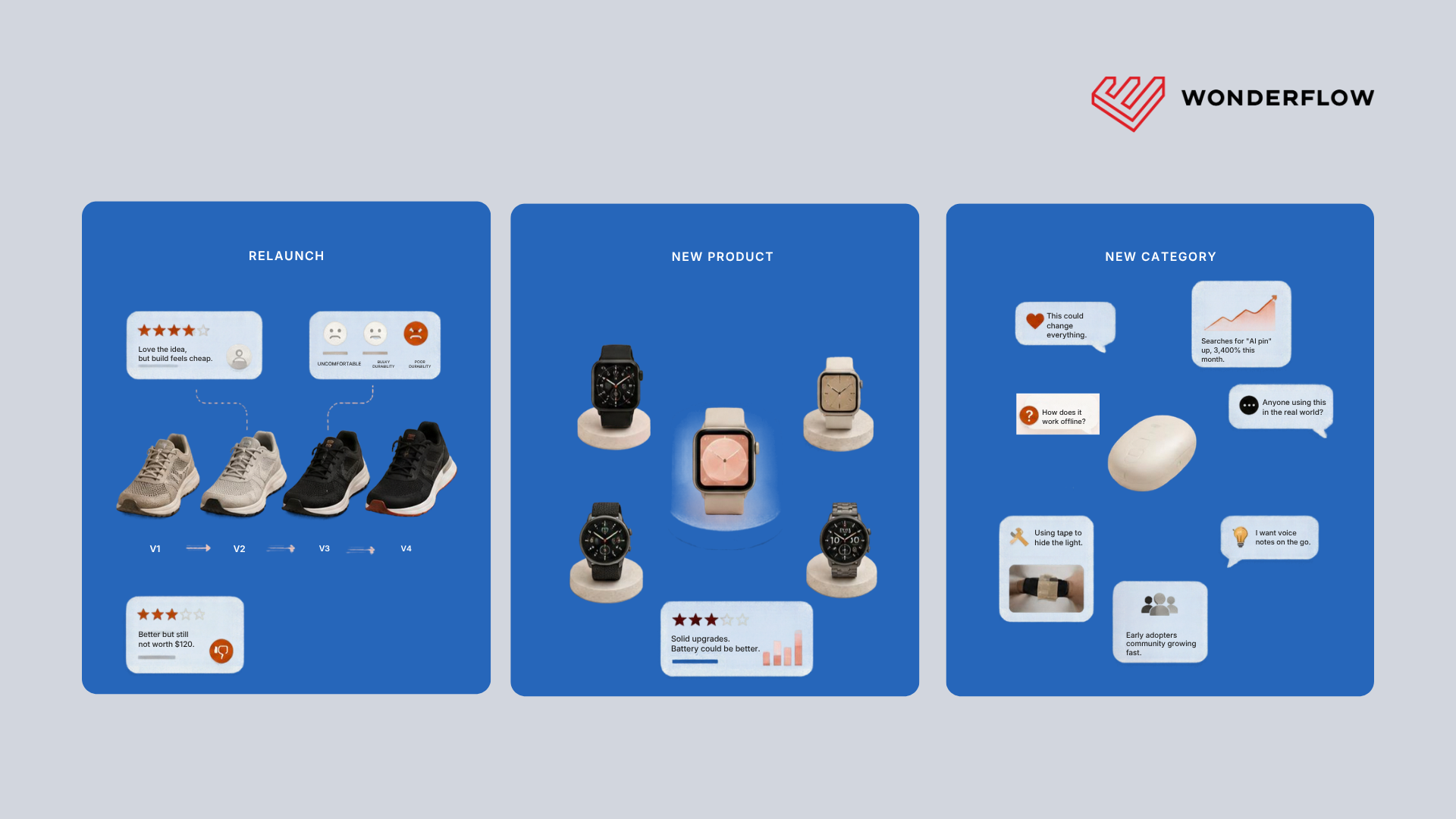

Launches are not all alike, and the kind of launch you are planning shapes the customer research you can do. A team bringing out the fourth version of a familiar product has a very different starting point from a team creating a category from scratch. Three situations are worth separating, since each has its own advantages and its own difficulty.
Imagine you are releasing the next version of a product, whether that is a version two, three or four. You already own a great deal of information. Reviews of earlier versions, contact center records and social conversations tell you what customers like and what bothers them. You know whether there are quality problems, missing features or recurring complaints. In a sense, the research has already been done, and it was done by your own customers. A customer insights platform that gathers these sources gives you the full history of the product in one place.
The hard part is turning that knowledge into a better product. Fixing known issues is necessary, and it may not be enough. A relaunch also needs something new and exciting to give people a reason to care. Not every relaunch works. Some perform below expectations, and sometimes the new version disappoints the regular users who were most excited about it.
In this case the product is new to your company, but the category already has history. You will not have reviews of your own product, yet you can learn a lot from customers of competing products. Reviews, social media conversations and forum discussions all describe what buyers want and where the market disappoints them.
The main challenge is differentiation. The category is already crowded, and you need a clear answer to a simple question: what are you offering that customers cannot get today? Competitor feedback holds the answer. Recurring complaints point to gaps, frequent wishes suggest features to add and praised elements show what you need to match. Combining these findings often reveals a position that no competitor currently owns. Customer insights software lets you line up competitor products on the topics that matter and see where the openings are.
The rarest and most difficult case is launching something that does not exist yet. Think about how common capsule coffee machines are today. There was a time when nobody had one at home, because the product had not been invented.
With no direct competitors, there are no competitor reviews to study, so the research leans on other sources. Social media and online forums become the main window into the market. You are looking for early signs of opportunity, such as frustrations with current alternatives, workarounds people have developed and general trends that suggest a need is forming. The data is broader and less tied to a specific product or competitor, and it takes more interpretation. A voice of customer platform that covers social and forum conversation at scale is what makes that kind of broad, exploratory reading manageable.
Positioning is the biggest risk here. You have to find out whether people understand what your product is and whether it responds to a real need. Feedback from related products can help. If you are creating a new kind of kitchen device, for instance, conversations about the manual methods people use today can show what they find tedious and what they would pay to avoid. Early testing and continued monitoring after launch matter even more in this case, because there is no established baseline to compare against.
In every case, the first step is to identify what evidence you have and where the gaps are. If you are working through a launch and are unsure which of these three situations you are in, answer that question first, because it determines where to look and what to expect.
Wonderflow helps leading consumer brands transform unstructured feedback into actionable insights. Its AI Product Intelligence platform analyzes millions of online ratings, reviews, surveys, and customer comments, empowering teams to make smarter product, marketing, and customer experience decisions.
The AI platform that transforms customer feedback into actionable insights