How to Turn Customer Reviews Into Faster Product Decisions with AI MCP
AI



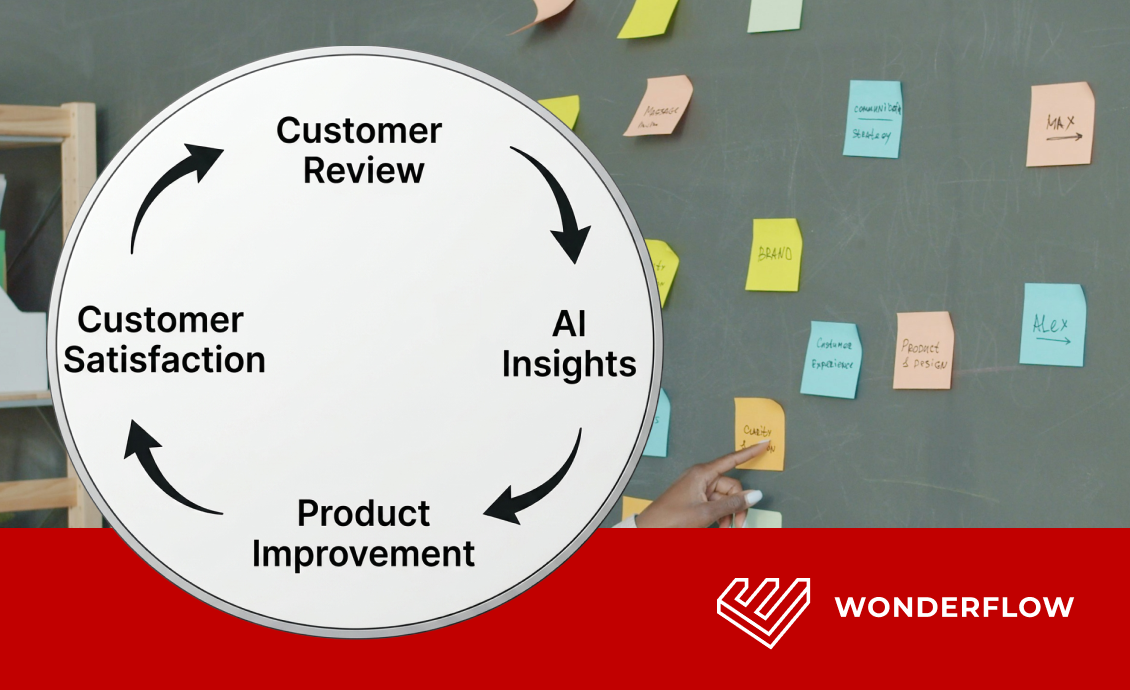

Customer reviews offer a direct window into how people experience a product. You can learn what customers enjoy, what frustrates them, and where products fall short of expectations just by studying the reviews. For product teams that are always developing their product lines, this feedback can guide everything from feature improvements to future product development.
Now imagine having thousands of individual reviews that you need to sort, analyze and turn into meaningful insights. Customer feedback is often spread across retailer websites, e-commerce marketplaces, and other online channels, making it difficult to identify recurring themes or emerging issues. By the time teams manually review the data, valuable opportunities to improve the product may have already been missed.

Modern consumer intelligence tools, like Wonderflow, make it possible to analyze customer reviews at scale. By organizing feedback into themes, identifying recurring patterns, and surfacing the issues that matter most, they help product teams make faster, more informed decisions based on what customers are actually saying.
Product teams often rely on metrics like sales, return rates, or customer support tickets to evaluate performance. While these metrics are important, they don't always explain why customers feel a certain way.
Customer reviews provide that missing context.
They reveal:
Looking at reviews collectively helps businesses understand recurring themes rather than isolated opinions.
Organizations using AI for customer review analysis can automatically organize this feedback into meaningful topics, making it much easier to identify trends across thousands or even millions of reviews.
Reading a handful of reviews can be helpful, but it rarely tells the full story. For example, one customer may complain about battery life while another praises it. Looking at these reviews individually makes it difficult to determine whether there's a widespread issue. Instead, businesses should focus on patterns.
Questions worth asking include:
When similar comments appear repeatedly, they point to opportunities that deserve attention.
Product teams constantly balance competing priorities. New feature ideas, bug fixes, performance improvements, and customer requests all compete for limited development time. Customer reviews provide evidence that helps teams prioritize more effectively.
For example, review analysis may reveal that:
Instead of relying on assumptions or the loudest internal opinions, teams can make decisions based on recurring customer feedback.
Using a product intelligence platform makes it easier to identify which improvements will have the greatest impact on customer satisfaction.
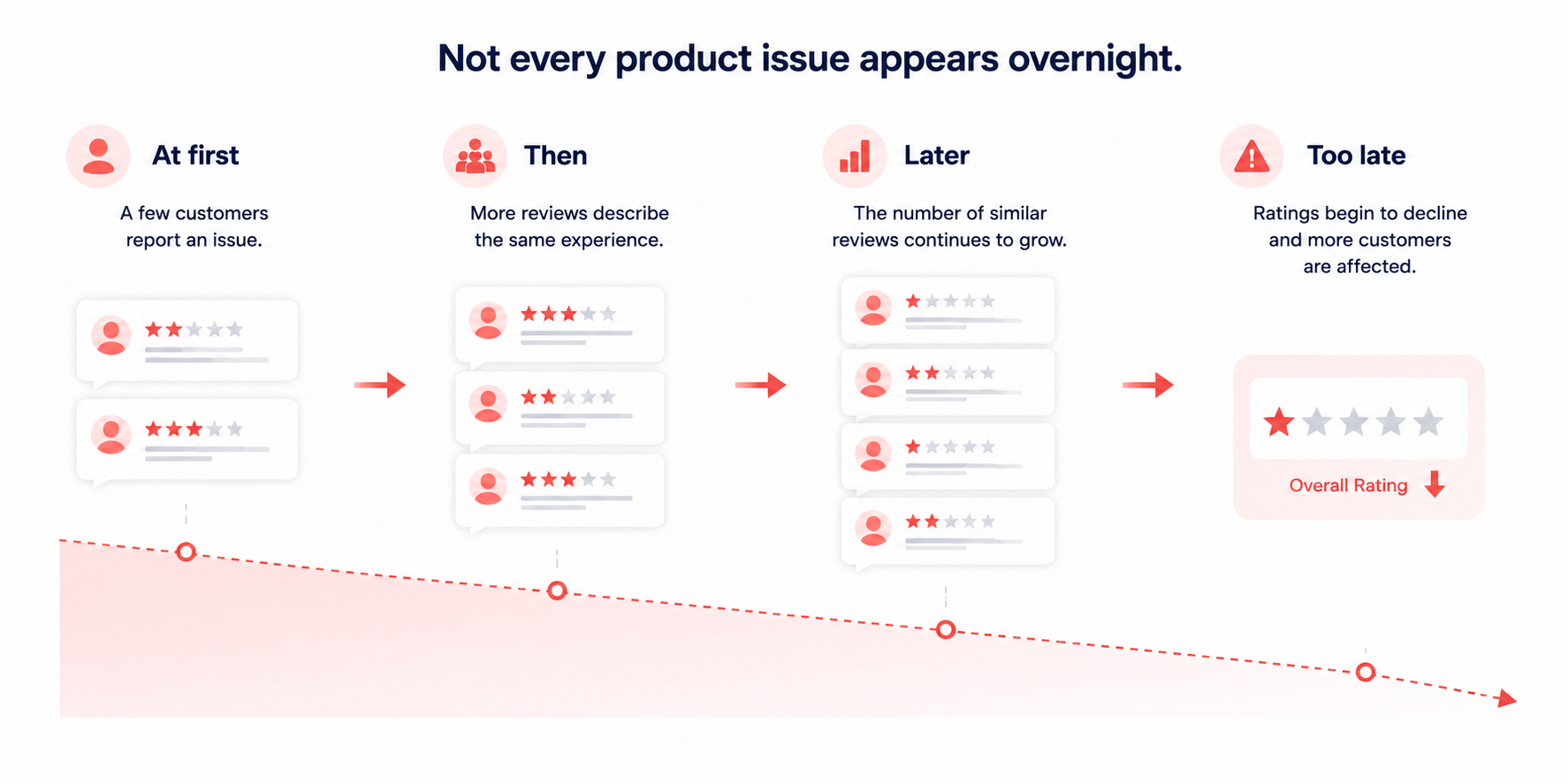
Not every product issue appears overnight.
Many problems develop gradually. A few customers report an issue at first, followed by more reviews describing the same experience. Without continuous monitoring, these trends can go unnoticed until ratings begin to decline.
Review analysis helps businesses detect these early warning signs.
Examples include:
Spotting these patterns early gives teams time to investigate and respond before the issue affects a larger group of customers.
Customer reviews don't just highlight problems. They also reveal what makes successful products stand out.
Businesses can compare feedback across:
These comparisons help teams understand which features customers value most and where products fall short.
For example, if customers consistently praise a competitor's ease of use while criticizing your product's setup process, that insight can directly influence future product improvements. Consumer feedback provides a level of detail that traditional market research often can't match.
Share insights across the business
Product decisions rarely involve just one team.
When review analysis is centralized, everyone can work from the same insights instead of maintaining separate reports.
A customer insights platform makes it easier for different departments to access consistent, up-to-date consumer intelligence, improving collaboration across the organization.
Manual review analysis often involves spreadsheets, dashboards, and hours of reading customer comments.
Modern AI-powered tools dramatically reduce that effort by automatically:
Instead of spending days organizing information, teams can focus on solving the problems customers care about most.
This also allows organizations to revisit customer feedback more frequently, rather than limiting analysis to quarterly or annual reviews.
Customer feedback shouldn't be treated as something that's reviewed only after a product launch. It should be part of an ongoing process that helps teams learn, adapt, and improve.
The businesses that consistently build better products are often the ones that listen most carefully to their customers. They don't rely on isolated comments or assumptions. Instead, they look for patterns, validate decisions with evidence, and respond quickly when customer needs change.
By combining review analysis with a voice of customer platform, organizations can transform everyday customer feedback into a continuous source of product intelligence. Rather than reacting to problems after they've grown, teams can identify opportunities earlier, prioritize improvements with confidence, and build products that better meet customer expectations.
Customer reviews contain valuable insights, but finding them manually doesn't scale.
Book a demo to see how Wonderflow can help your product, marketing, and customer experience teams unlock the full value of customer feedback.
Wonderflow helps leading consumer brands transform unstructured feedback into actionable insights. Its AI Product Intelligence platform analyzes millions of online ratings, reviews, surveys, and customer comments, empowering teams to make smarter product, marketing, and customer experience decisions.


The AI platform that transforms customer feedback into actionable insights