Best AI Tools for Amazon Review Insights in 2026
Feedback Analysis



%20(1).png)

For consumer brands selling on Amazon, reviews are more than just social proof, they are a direct line to product strategy, competitive intelligence, and customer experience improvement. But with millions of reviews generated every month, manually reading them is not an option. AI-powered review analytics tools have become essential infrastructure for modern VoC (Voice of Customer) programs.
Here is a guide to the best AI tools available in 2026 for extracting actionable insights from Amazon reviews.
Amazon is the world's largest product review database. A single mid-tier product listing can accumulate thousands of reviews across multiple markets, languages, and star ratings. For brands, this data contains:
The tools below differ significantly in their depth, focus, and fit for different team types.
.png)
Best for: Enterprise consumer brands wanting deep, multi-source VoC analytics
Wonderflow is a Voice of Customer analytics platform built specifically for consumer brands. Unlike generic text analytics tools, Wonderflow was designed from the ground up around structured product review data, making it one of the most sophisticated options for Amazon review analysis in 2026.
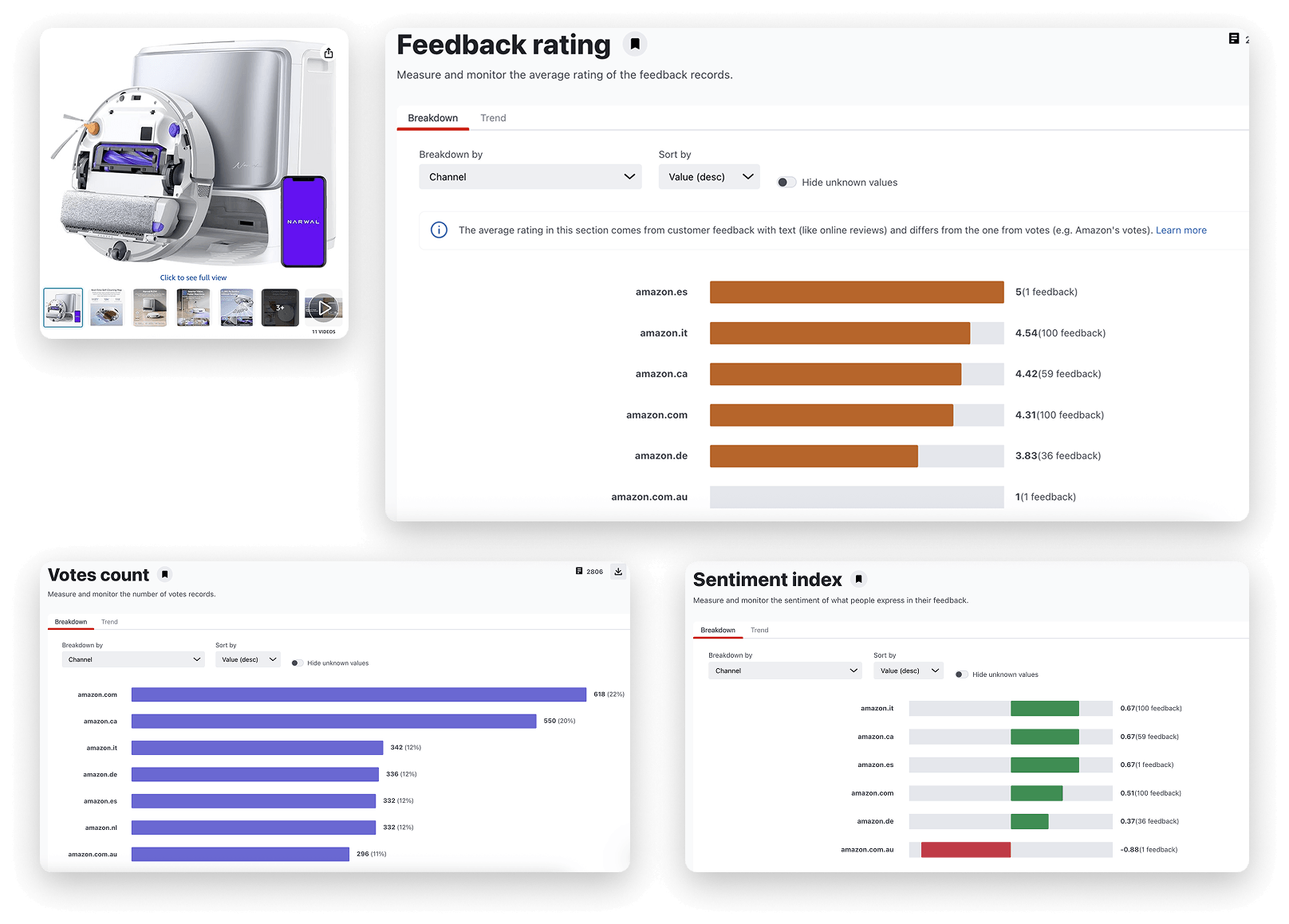
Key capabilities:
Who it's for: Wonderflow is purpose-built for enterprise use cases. Among customers are consumer electronics brands like Philips and Haier, sporting goods companies, and beauty conglomerates who need to analyze tens of thousands of reviews across large, complex product portfolios. It is less suited for individual sellers or small brands.
Standout feature in 2026: Wonderflow's Marketplace Intelligence layer gives enterprise brands a live, month-over-month view of category dynamics: top brands by price tier, volume concentration, and emerging competitors, across Amazon and beyond.For brands used to expensive, low-frequency market research that delivers a single annual snapshot, this is a structural shift. It covers not just the products you already track, but the entire competitive landscape, including categories you haven't yet entered. That makes it especially useful for new category exploration, where traditional research tools either don't cover the space or require significant additional spend.
Best for: Brand managers and category teams focused on Amazon market share
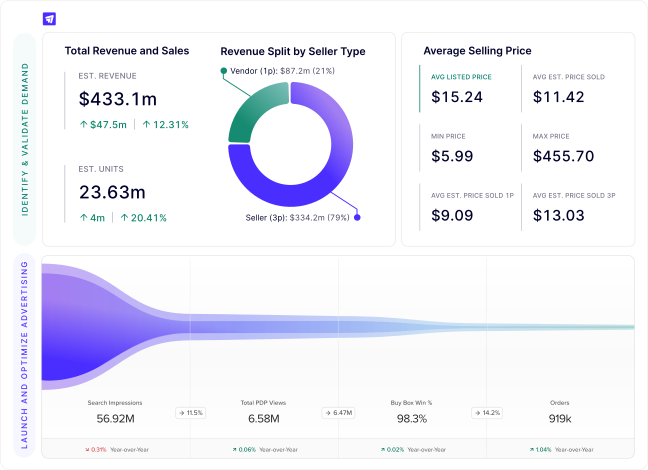
Jungle Scout Cobalt is the enterprise evolution of the well-known Jungle Scout platform, designed for larger brands and agencies managing substantial Amazon presences. Its review analytics layer sits within a broader Amazon intelligence suite that includes share of voice, search ranking, and sales estimation.
Key capabilities:
Standout feature: The ability to correlate review sentiment shifts with advertising spend and sales rank changes — useful for diagnosing whether a rating drop is causing or caused by a decline in organic visibility.
Limitation: Cobalt is deeply Amazon-centric. Brands that sell across multiple channels and need an integrated view of customer feedback beyond Amazon will find it limited.
Best for: Brand and marketing teams running multi-channel listening programs
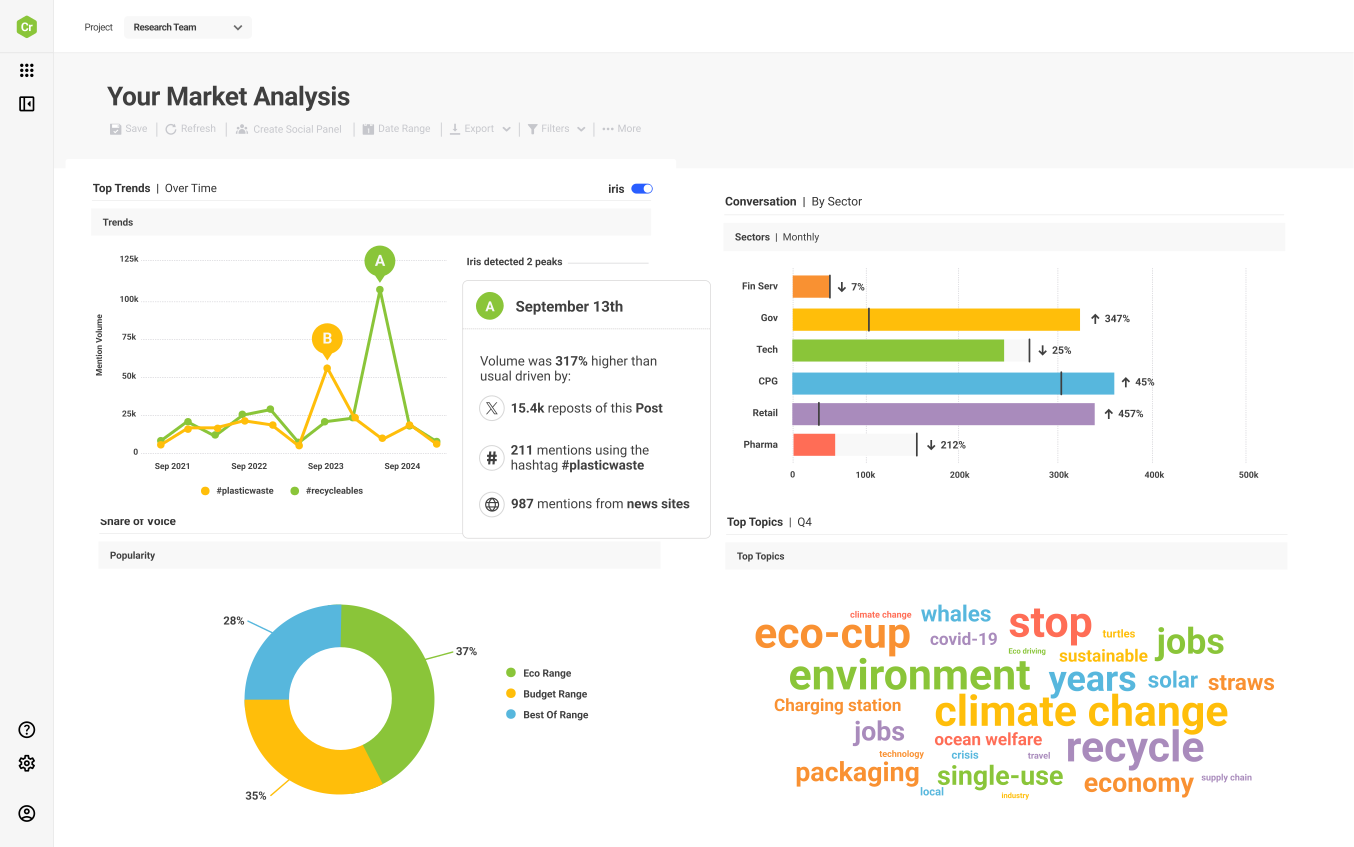
Brandwatch is primarily a social listening and consumer intelligence platform, but its data coverage has expanded significantly to include Amazon reviews alongside social media, news, forums, and review sites. It works well for teams that need Amazon review data as one input among many.
Key capabilities:
Limitation: Because Brandwatch is not built primarily around product reviews, its structured analysis of product attributes (battery life, ease of assembly, etc.) is less precise than dedicated review analytics tools like Wonderflow. It excels in breadth, not in product-level depth.
Best for: Enterprise brands focused on review collection, syndication, and UGC management at scale
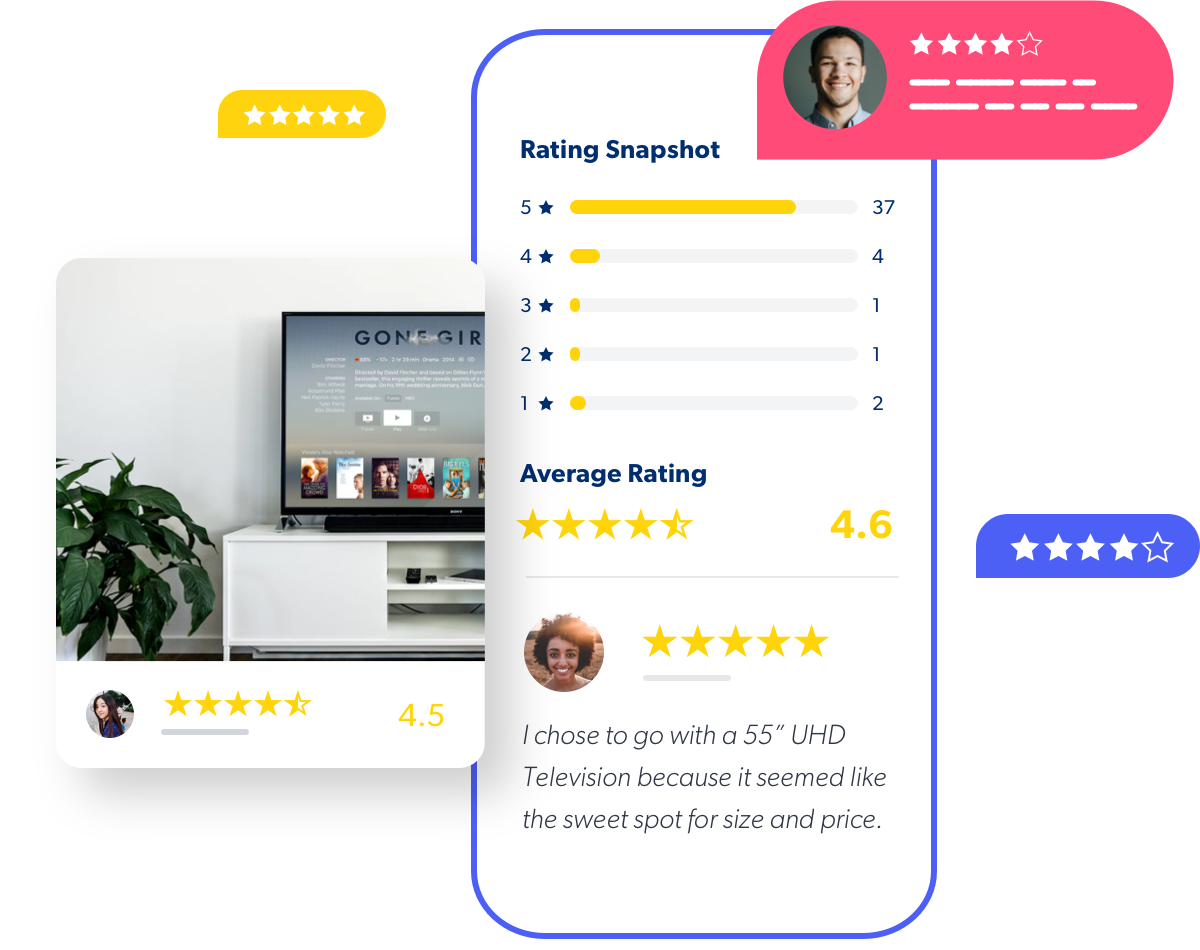
Bazaarvoice is one of the longest-standing players in the enterprise ratings and reviews space. Its core strength is not review analysis per se, but the collection and distribution of user-generated content — reviews, Q&A, photos, and videos — across a network of over 12,500 brand and retailer websites. For brands that need review intelligence alongside a managed UGC infrastructure, it remains a significant platform.
Key capabilities:
Standout feature: The syndication network is Bazaarvoice's defining advantage. Brands with extensive catalogs can automatically distribute their review content to retailer partners at scale — creating consistent social proof across every touchpoint where the product appears.
Limitation: The analytics layer is functional but secondary to the UGC management and syndication infrastructure. Brands that need deep, granular product attribute analysis or cross-channel VoC intelligence will find Bazaarvoice less suited to that use case. Some enterprise users also note the platform feels dated in its UX and that implementation is resource-intensive.

Best for: eCommerce and category teams needing review insights embedded in a full digital shelf view
Profitero+ (now the rebranded flagship offering from Profitero, owned by Publicis) is a digital shelf analytics platform that tracks over 80 million products across 1,400+ retailers in 70+ countries. Reviews and ratings are one dimension of a much broader intelligence layer that includes pricing, content quality, search placement, availability, and competitive benchmarking.
Key capabilities:
Standout feature: Profitero+'s ability to connect review performance to the full Amazon sales funnel gives eCommerce teams a cause-and-effect view that pure review tools cannot replicate. A drop in ratings can be traced directly to its commercial impact on organic visibility and revenue.
Limitation: Review analytics is not Profitero+'s primary focus. It is one module within a broader digital shelf platform. Brands seeking specialist, deep-dive VoC analysis (aspect-level sentiment across large multi-language portfolios, for example) will find it less comprehensive than dedicated review analytics platforms.
Best for: Small brands, analysts, and product teams with limited budgets
General-purpose large language models have made basic review analysis accessible to anyone. By pasting review batches into ChatGPT, Claude, or similar tools and applying structured prompts, analysts can extract themes, summarize sentiment, and identify recurring complaints without any dedicated software.
Key capabilities:
Limitations:
Verdict: Useful for spot analysis and quick validation. Not a substitute for a dedicated review analytics platform when dealing with large product portfolios or ongoing monitoring needs.
Beyond features, here are the questions that matter most when evaluating a platform:
1. Can it separate signal from noise at scale? A product with 10,000 reviews contains a lot of noise like bots, irrelevant comments, one-word responses. The best tools filter aggressively and weight reviews by relevance.
2. Does it support high quality analysis on all languages? For global brands operating on Amazon Germany, Japan, France, or Italy, cross-lingual data accuracy is essential for driving impactful, localized strategy.
3. Can it tell you why ratings changed, not just that they changed? Trend lines are easy to produce. Root cause analysis is where real value is created. Look for vendors that can help you link a rating drop to a specific product attribute, a specific SKU, a specific time window, or a specific geography.
4. Does it integrate with your existing product and commercial workflows? The best review insight in the world is useless if it sits in a separate dashboard that no one checks. Look for tools that connect to where decisions are made: product roadmaps, QA systems, PDP content workflows. Look for the possibility to share reports and AI outputs cross team in a streamlined way.
5. How does it handle Amazon vs. other channels? For brands that sell across Amazon and other retailers, isolating channel-specific issues is critical. A tool that blends all reviews together will obscure the root cause of problems that are channel-specific.
Amazon review analysis has matured significantly. The era of star-rating dashboards and basic word clouds is over. The most valuable tools in 2026 combine natural language understanding with structured product intelligence, competitive context, and cross-channel comparison. They can produce insights that directly feed product development, supply chain decisions, and commercial strategy.
For enterprise consumer brands managing complex product portfolios across global markets, the right tool is not just a reporting layer. It is a strategic intelligence system.
Looking to understand how a dedicated VoC platform compares to in-house review analysis? Get in touch with the Wonderflow team to see our platform in action.
Wonderflow helps leading consumer brands transform unstructured feedback into actionable insights. Its AI Product Intelligence platform analyzes millions of online ratings, reviews, surveys, and customer comments, empowering teams to make smarter product, marketing, and customer experience decisions.


The AI platform that transforms customer feedback into actionable insights